
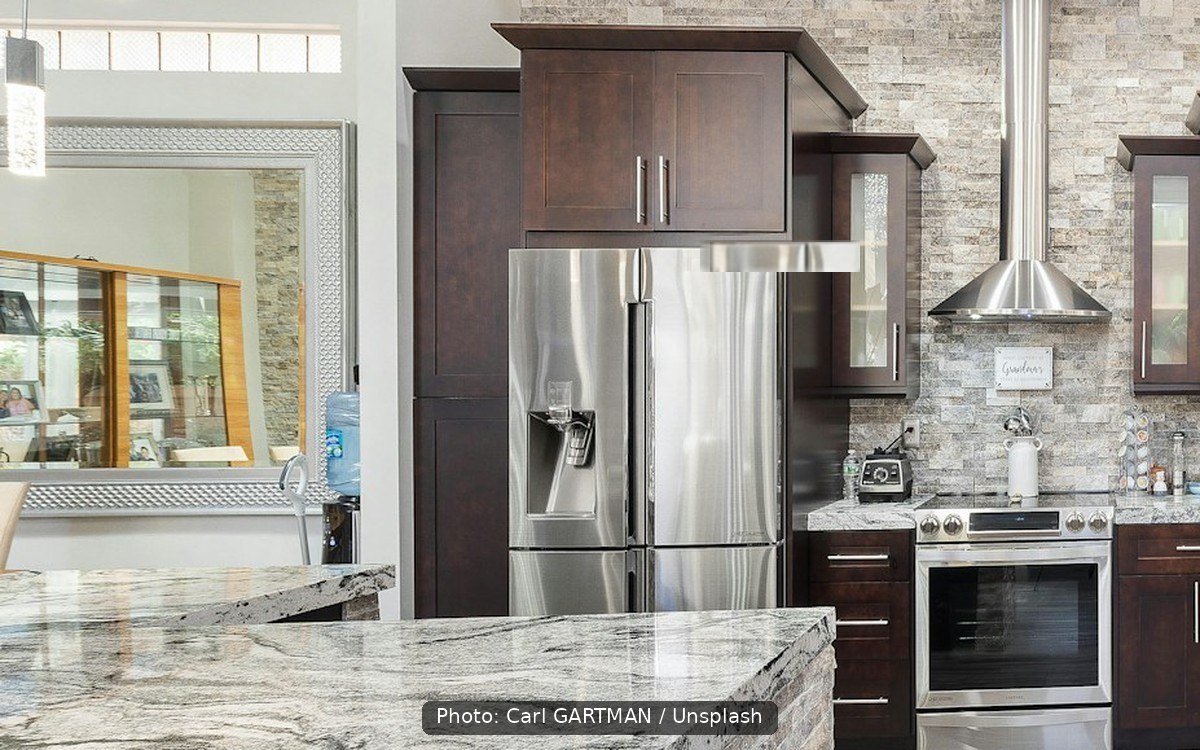

A refrigerator runs every minute of every day. When it fails, you find out fast, usually with a freezer full of food at risk. That makes it worth shopping carefully, not just for the lowest sticker price.
Here is the hard truth up front. Refrigerators today are built high-tech with cheaper parts. They have more electronics, sensors and features than older units ever did, and many of the parts that hold it all together are lighter and less durable than they used to be. A fridge from 30 years ago was simple. Today's model is closer to a computer that keeps food cold. That changes how you should buy.
What Usually Breaks
Know where the trouble starts before you pick a model.
Ice maker and water dispenser. These fail more often than anything else. They use valves, small motors, heaters, sensors and water lines. They freeze, clog and leak. On many models, the ice maker is the first service call.
Condenser. This is the part that dumps heat. On many models a fan cools it, and dust and pet hair build up fast. Barns, shops and dusty farmhouses are hard on condensers. A clogged or failing condenser makes the fridge run hot and work harder.
Logic board. This is the main control board. When it fails, the fridge may stop cooling, act erratically or go dark on the display. Boards can be expensive to replace, and parts for older models can be hard to find.
Every feature you add is another part that can fail. Keep that in mind when a salesperson pushes options you will rarely use.
Door Style Comes Down To Preference
Door style and how the compartments are laid out come down to personal preference. There is no single right answer. Think about how you load groceries, how tall the people in your house are, and whether you need wide shelves or narrow doors. Pick the layout you will live with every day.
Top freezer. This is usually the simplest and lowest-priced style. Energy Star says top-freezer models tend to use the least energy. There is less to go wrong, which makes it a solid pick for a shop, basement or second fridge.
Bottom freezer. Fresh food sits at eye level. The freezer is a pull-out drawer below. It is comfortable to use and often comes with fewer extras.
Side-by-side. The fridge and freezer are tall and narrow, next to each other. Narrow doors help in a tight kitchen. Wide platters and sheet cakes can be a tight fit. Most of these come with ice and water in the door.
French door. Two fridge doors sit on top, with a freezer drawer below. These are popular and roomy, and they are usually loaded with features. They are often the most expensive style and carry the most parts.
Counter-depth vs. standard depth. A counter-depth fridge sits nearly flush with your cabinets. It looks clean, but you give up interior space for the same width. A standard-depth fridge sticks out farther and holds more. If you buy in bulk, put up garden produce or store a season's worth of meat, standard depth usually makes more sense.
Size It To Your Household
Capacity is listed in cubic feet. Bigger is not always better. Energy Star notes that bigger refrigerators generally use more energy, and that the most efficient models usually fall in the 16 to 20 cubic foot range.
Think about how you really live. A couple who shops weekly needs less space than a family that shops once a month and freezes beef. Many rural households do better with a moderate fridge and a separate chest freezer than with one giant unit. If one machine fails, you have not lost everything.
Energy Use
Look for the yellow EnergyGuide label. It estimates yearly energy use and cost. Energy Star says its certified refrigerators are about 9 percent more efficient than models that only meet the federal minimum. It also says an old fridge uses about 20 percent more energy than a certified one.
That old unit in the garage or shop may be costing you more than you think. Energy Star estimates a refrigerator over 15 years old could cost about $95 a year more to run.
Features Worth Paying For
Worth the money: - Solid door seals and sturdy shelves and bins - Adjustable shelves that fit your containers - Steady temperature performance - Easy access to clean the condenser, when the design allows it
Handy, but think twice: - Ice and water in the door. Convenient, and also the most likely part to fail. Hard water and well water are hard on filters and valves. Some buyers skip the dispenser, choose an ice maker inside the freezer only, or skip ice altogether. - Smart WiFi features. Phone alerts and remote settings appeal to some people. They also add another board and another failure point, and they do nothing to keep food cold. - Dual evaporators. Separate cooling for the fridge and freezer can help with humidity and keep freezer odors out of fresh food. That is a real benefit on some models, and it is still more parts. - Door-in-door panels, specialty drawers and touch screens. Conveniences, not necessities.
Pay for features you will use every day. Skip the rest.
Measure Before You Buy
This step matters as much as picking the model. Height, depth and width all come into play. Without careful planning, you can end up returning a fridge that will not fit, or cutting and altering cabinets to make room. Measure the opening. Then measure again.
Go beyond the hole in the cabinets:
- Height, width and depth. Check all three, plus the clearance the maker recommends for air around the unit. A fridge that fits the width but sticks out too far, or clears the opening but hits a soffit above, is still a bad buy.
- Door swing. Confirm the doors open fully against the wall or island, wide enough to pull drawers out.
- The path in. Measure every doorway, hallway and turn. Some doors have to come off for delivery.
- Water line. For any model with ice and water, verify that you have a water line at the refrigerator, or that you can get one there. Check for a shutoff nearby. If you do not have access to a line, plan the plumbing before delivery or buy a model without ice and water.
- Power. Confirm outlet location and a suitable circuit.
- Delivery and haul-away. Ask what is included and what costs extra, including water-line hookup.
Delivery, install, haul-away, water-line work and related fees can add significantly to the cost of the purchase. Get an all-in price that covers every charge before you buy, not just the price of the fridge itself.
Level It And Leave Room Inside
Two habits make a real difference in how well a fridge runs.
Level the unit. Most refrigerators have adjustable feet. Use a level and set them so the cabinet sits flat and the doors close on their own. A unit that sits out of level can throw off the door seals, leave doors hanging open and put extra stress on the compressor and other parts. Check level at install, and check again if the floor settles or the fridge is moved.
Do not fill it to capacity. Cold air needs room to move. When shelves and drawers are jammed solid, the fridge works harder to hold an even temperature, food in the back runs colder or warmer than it should, and the compressor runs longer. Leave space between packages and keep the vents clear. If you regularly need more room than that, add a chest freezer instead of packing the fridge to the ceiling.
Warranties, Service And Extended Coverage
Warranties vary a lot by brand and even by model. Do not assume. A company's service record may be as important as the features you buy. A fridge loaded with options is little help if parts are scarce or the nearest tech is weeks out. Look at how owners describe repairs for that brand and that model before you put money down.
Read the warranty before you buy. Check:
- Parts and labor. How long are both covered? Some plans pay for parts but not the service call.
- Sealed system. This covers the compressor, cooling coils and refrigerant. It is often covered longer than the rest of the fridge. Confirm exactly which parts count.
- Ice maker and electronics. Since these fail most, see whether they get extra coverage or are excluded.
- Who does the repairs. Is there an authorized tech in your area? A long warranty does not help much if the nearest service is 100 miles away.
Should you take the extended warranty? That is up to the buyer. If you are counting on about five years from a major purchase, you might want the extended warranty as insurance against early failure. Service rates for some models can run as high as 10 percent in the early years. Read what the plan covers, what it excludes, who backs it and how you file a claim before you pay extra.
Read Real Reviews For The Exact Model
Reading actual reviews on sellers' sites for the specific model can give you a clear idea of the good and the bad.
- Search the exact model number. Brand reputation alone means little. Two models from the same brand can perform very differently.
- Look for patterns. One angry review may be bad luck or a rough delivery. Ten reviews saying the ice maker quit in the first year point to a real problem.
- Read the middle ratings. Three-star reviews often give the most balanced picture.
- Check the dates. Reviews written after a year of use say more than ones posted the day it arrived.
- Watch for service complaints. Note mentions of slow repairs, hard-to-get parts or warranty headaches.
- Read the questions and answers. Owners often cover noise, fit and how cold the unit really gets.
Bottom Line
Buy the size and style that fit how you live. Door layout and compartments are personal preference. Be honest about which features you will use, especially ice and water. Measure height, depth and width carefully so you do not face a return or cabinet work. Confirm water-line access for any ice-and-water model. Get an all-in price that includes delivery, install, haul-away and hookups before you commit. Check the warranty and the company's service record. Read seller reviews for that exact model. Decide for yourself on an extended warranty if you need roughly five years of protection against early failure. Once the fridge is home, level it and leave breathing room inside.
A simpler fridge with fewer extras is often the one still running years from now.